
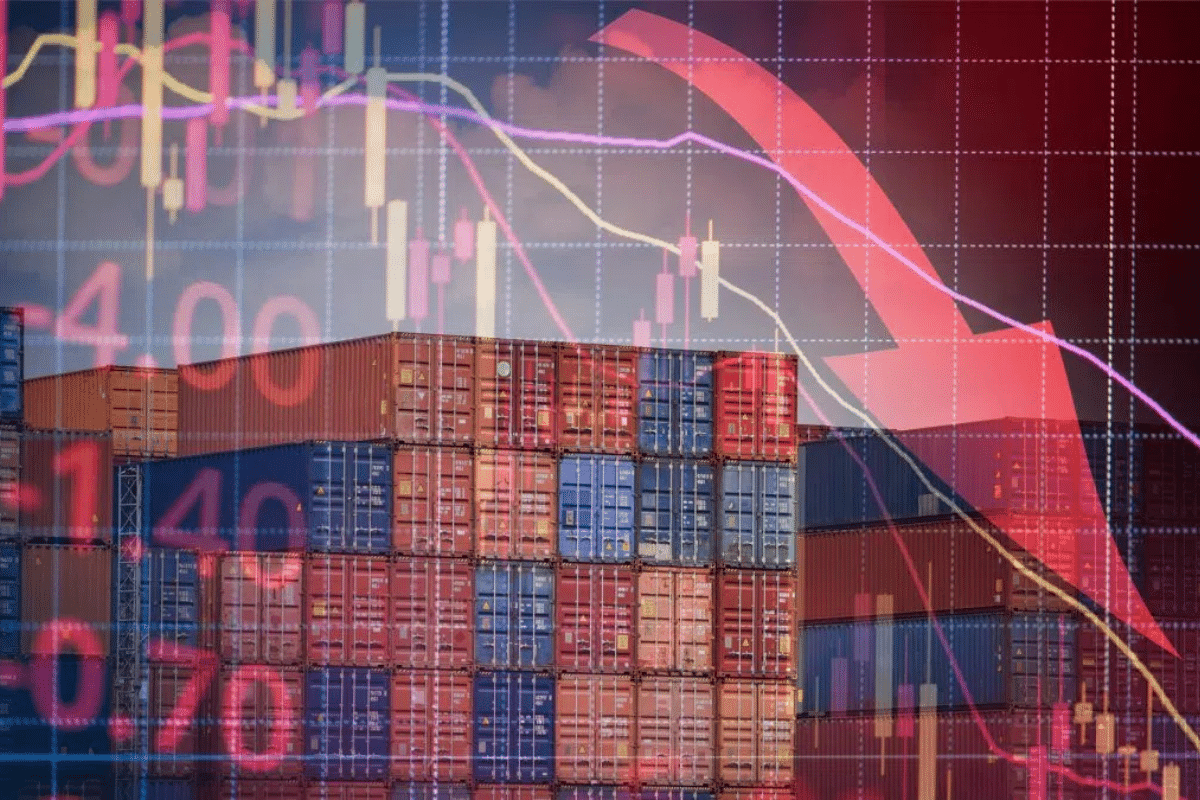

How uncertainty became the new operating system for global trade
A few years ago, trade conversations were full of big numbers. Growth percentages. Expansion plans. New markets opening up one after another. Now, when people talk about trade in 2026, the tone feels different. Less excitement, more calculation. Less optimism driven by momentum, more decisions driven by risk awareness. This shift explains why international trade forecasts 2026 are not gloomy, but noticeably restrained. Trade is still moving, but the mindset behind it has changed.
International trade forecasts 2026 · When trade planning starts with “what could go wrong”
Many people assume trade forecasts focus on opportunity first. In reality, international trade outlook post-2025 often starts with risk mapping.
Companies now ask practical questions. What happens if shipping routes change? What if regulations shift mid-year? What if tariffs are adjusted without long notice?
This is why international trade risks 2026 sit at the centre of planning conversations. Risk is no longer something discussed at the end of a meeting. It is usually the first slide.
Why trade growth feels slower, even when volumes move

The world trade growth forecast 2026 suggests moderate expansion, yet many businesses feel like trade is dragging its feet.
The reason lies in behaviour, not numbers. Buyers split orders. Suppliers diversify partners. Contracts get shorter. Even when global trade volumes forecast 2026 rise, confidence moves more slowly. For exporters in Malaysia, this often shows up as smaller but more frequent orders, instead of one large commitment.
Policy signals matter more than trade incentives
In the past, trade incentives grabbed attention. Today, consistency does. The international trade policy outlook 2026 highlights how businesses value predictable rules more than temporary advantages. Sudden changes in standards, documentation, or compliance can disrupt planning faster than moderate tariffs.
This connects directly to international trade and tariffs 2026 discussions. Tariffs still matter, but unpredictability matters more.
Global trade and geopolitics 2026 is not a separate conversation anymore. It is embedded into daily trade decisions. Companies quietly adjust routes, sourcing locations, and market exposure based on geopolitical signals. These adjustments rarely make headlines, but they shape the global trade outlook 2026 in a very real way. Trade flows adapt before policies are officially announced.
The global supply chain trade outlook 2026 shows a clear pattern. Businesses are not trying to rebuild old systems. They are redesigning them. Redundancy replaces efficiency as the top priority. Multiple suppliers beat single-source savings. Regional hubs gain importance. This explains why some Southeast Asian economies quietly benefit from this shift, without aggressive expansion campaigns.
International trade forecasts 2026 · Digital tools are becoming trade infrastructure
International trade digitalization 2026 is no longer an innovation story. It is infrastructure. Digital documentation, automated compliance checks, and integrated logistics platforms reduce friction that used to slow cross-border trade. For smaller firms, this lowers entry barriers. For larger firms, it reduces exposure to human error. Digital trade tools do not eliminate risk, but they make trade more manageable.
International trade opportunities 2026 are less about discovering new markets and more about operating better within existing ones.
Companies focus on reliability, delivery consistency, and regulatory alignment. The future of international trade in 2026 rewards those who understand systems, not just demand. This shift often favours businesses that are patient, observant, and flexible.
International trade forecasts 2026 describe a world where trade continues without drama. Growth exists, but caution shapes every step. The story is not about expansion at all costs. It is about operating with awareness, adapting quietly, and staying prepared in a system that expects disruption rather than stability.
In 2026, trade decisions tend to age better when they are built around resilience rather than speed.
- World Trade Organization – World Trade Statistical Review
https://www.wto.org/english/res_e/statis_e/wts_e.htm
- UNCTAD – Global Trade Update
https://unctad.org/topic/trade-analysis
- World Bank – Global Economic Prospects
https://www.worldbank.org/en/publication/global-economic-prospects