
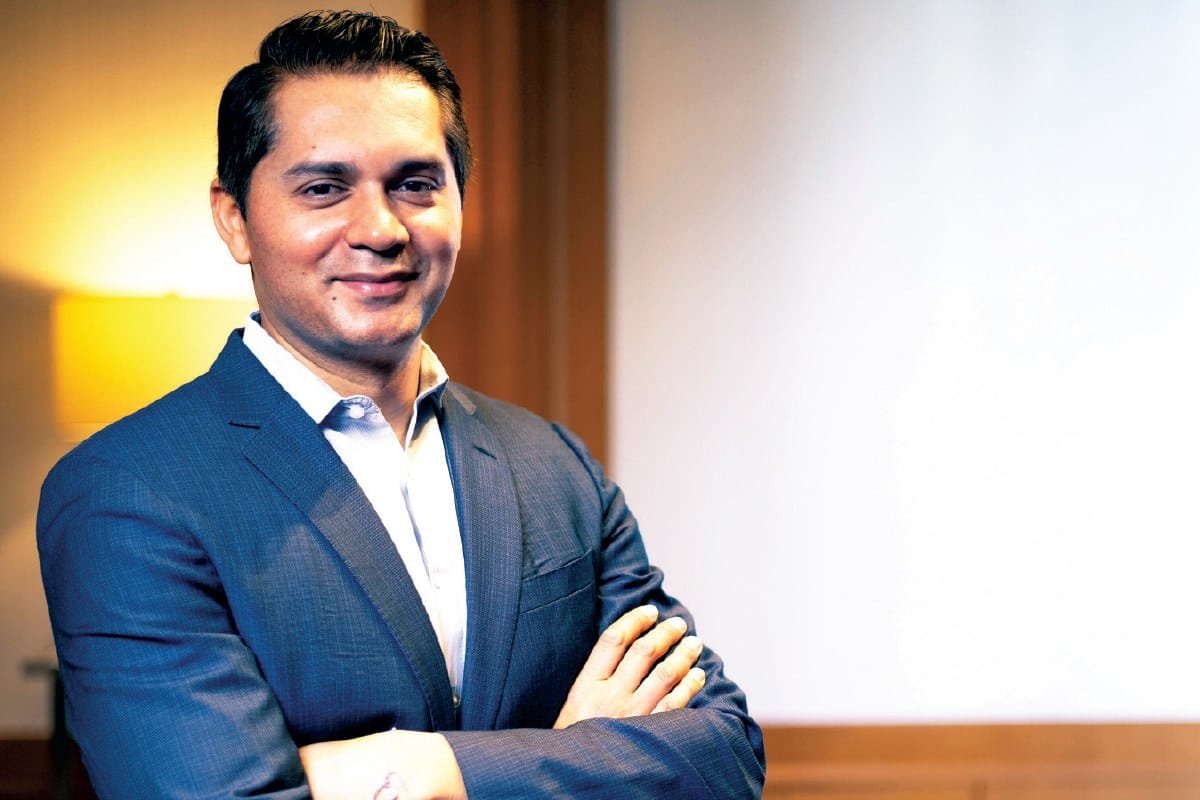

A US-based venture capital firm managing more than US$6 billion in assets is seriously considering opening an office in Kuala Lumpur. This is not a generic statement about the market. It is the direction reached after its co-founder and co-CEO flew to Malaysia in person to meet local entrepreneurs and institutional investors. The firm is called B Capital, and its view of Malaysia deserves a careful read from the local startup ecosystem.
- What kind of firm is B Capital
- The two co-founders: Eduardo Saverin and Raj Ganguly
- What B Capital plans to do in Malaysia
- B Capital’s investment judgement criteria
- What specifically attracts B Capital to Malaysia
- Southeast Asia’s exit routes: still a structural challenge for the whole region
- Developments worth following
What kind of firm is B Capital
Headquartered in Manhattan Beach, California, B Capital is a venture capital firm focused on early-stage to growth-stage technology companies. According to its website (as reported in April 2024), its assets under management (AUM) exceed US$6 billion (about RM28.4 billion), and its portfolio spans more than 160 companies.
The firm has a strategic partnership with the global management consulting giant Boston Consulting Group (BCG). The logic behind the tie-up is that BCG serves the CEOs and directors of thousands of large companies worldwide, and B Capital’s portfolio companies can use that channel to reach potential corporate customers and partners directly.
In Southeast Asia, well-known companies B Capital has invested in include the used-car marketplace Carro, the logistics solutions provider Ninja Van, and the coffee chain Kopi Kenangan. The firm currently has offices in both Singapore and Indonesia.
The two co-founders: Eduardo Saverin and Raj Ganguly
B Capital was founded, and is co-led as co-CEOs, by two people with very different backgrounds.
Eduardo Saverin is one of the co-founders of Meta Platforms (formerly Facebook). His background as a technology entrepreneur has given the firm considerable visibility and a network of contacts across the global tech investment community.
Raj Ganguly spent 11 years at BCG and is the firm’s central figure on operations and corporate strategy. In February 2024, Ganguly travelled to Malaysia to speak at an event hosted by the retirement-fund institution KWAP (Kumpulan Wang Persaraan). Beyond meeting local pension fund bodies, the trip had clear business goals: meeting local entrepreneurs, looking for investment opportunities, and assessing the feasibility of opening an office in Kuala Lumpur.
What B Capital plans to do in Malaysia
Ganguly said in the interview that B Capital’s Malaysia plans operate on two levels.
First, opening a local office. He said: “You will see B Capital open an office locally. We already have offices in Singapore and Indonesia today, and opening one in Malaysia is a logical next step.”
Second, investing directly in Malaysian companies. He noted that the firm’s involvement in Malaysia has been limited in the past, and that it will move towards investing directly in companies headquartered in Malaysia.
On investment size, B Capital’s individual investments have historically ranged from US$250,000 at the early stage to US$125 million (deployed over several rounds) to back growth-stage companies looking to expand. Ganguly explained that the firm generally prefers to come in from Series B or Series C, because Series A is better suited to local investors who know the local market and its founders, while B Capital’s strength lies in helping companies move into regional and even global markets.
In terms of sector focus, B Capital concentrates on the following areas:
- AI-enabled software
- Healthtech and drug discovery
- Climate tech
- Cybersecurity
- Workforce management solutions
- Business-to-business (B2B) software and services
Ganguly pointed out in particular that Malaysia has a mature semiconductor hardware ecosystem, built mainly around outsourced semiconductor assembly and test (OSAT) companies and automated test equipment makers. This gives local companies a solid base for moving into the software layer. “We focus on AI software built on top of advanced semiconductor technology, and that is a very interesting entry point in Malaysia, because there is solid hardware expertise locally.”
On large language models (LLMs), Ganguly believes Malaysia does not need to build its own foundation models. Such projects are extremely expensive and are mainly a contest between the United States and China. The direction he favours more is for local companies to use open-source LLMs to build enterprise-facing middleware software, such as industry applications for workforce management or for assisting pharmaceutical R&D.
B Capital’s investment judgement criteria
In the interview, Ganguly set out systematically how B Capital’s investment logic differs from some of its peers, particularly in reflecting on the overheated venture industry of 2020 to 2021.
He described 2020 to 2021 as “the highest-valuation years I have seen in my 25-year investing career”. At the time, a large number of venture investors chased high-growth, high-burn startups, with profitability treated as secondary. He cited the first Southeast Asian startup to list in the US at that time (unnamed) as an example, saying its share price performed poorly after listing, which confirmed his view that a “high growth, negative profit” model has limited appeal to the capital markets.
After interest rates rose, valuations fell, but he observed the opposite extreme: some venture investors swung to over-emphasising cost cutting and profit, overlooking the need for growth.
B Capital uses the “Rule of 40” as its evaluation framework: a well-performing startup’s revenue growth rate plus its profit margin should add up to 40%. For example, 30% growth with a 10% margin, or 50% growth with a negative 10% margin, both meet the standard. Ganguly believes that, for Southeast Asian startups aiming to list on public markets, this is the financial shape investors actually expect to see.
He also distinguished between two kinds of loss-making companies: those that lose money on every customer they acquire, where the unit economics themselves are flawed, and those that are profitable per customer but loss-making overall because they keep reinvesting free cash flow into expansion. B Capital looks only at the latter.
On holding periods, B Capital positions itself as a long-term investor, willing to stay with portfolio companies for 5 to 15 years rather than the usual five-to-seven-year exit cycle. Ganguly said the firm insists on not being driven by FOMO (fear of missing out), an idea linked to his Harvard MBA classmate Patrick McGinnis, who is the person who popularised the term “FOMO”.
What specifically attracts B Capital to Malaysia
Ganguly listed several structural factors that he believes make Malaysia competitive:
- Accelerating foreign infrastructure investment: Digital infrastructure such as data centres and submarine cables is being built out in Malaysia on a large scale, providing underlying support for technology companies.
- A mature semiconductor hardware ecosystem: The supply chain made up of OSAT and automated test equipment makers gives software companies a hardware-synergy advantage.
- An engineer cost advantage: Ganguly noted that the average salary of Malaysian engineers is about half that of Silicon Valley (the figure is Ganguly’s statement in the interview, not an independent third-party statistic).
- High internet penetration: He cited an internet penetration figure of 125%, arguing that this makes Malaysia one of the better markets for global companies to expand into.
- A gradually maturing startup ecosystem: He has observed a growing number of “repeat founders” in Malaysia, with accelerator programmes from VC firms such as 500 Global and Gobi Partners continuing to nurture a new generation of entrepreneurs.
- Government and institutional support: B Capital regards policy and institutional support as one of the key external conditions for startup success.
Southeast Asia’s exit routes: still a structural challenge for the whole region
Ganguly candidly admitted that one of the core challenges facing the Southeast Asian venture ecosystem is a shortage of exit routes. “A lot of capital has come into this region and has produced excellent companies. But we need more exits.”
He noted that the Hong Kong stock market is going through a difficult period and is struggling to absorb Southeast Asian listings. The options currently available are mainly listing in the US or on local exchanges, and dual-listing is also a direction worth exploring.
In the interview (reported in April 2024), he expected that Southeast Asia might see one or two startups test the IPO window in the second half of 2024, but he also stressed that the real test is whether those companies can hold their share prices and sustain growth after listing. He predicted that a more significant improvement in liquidity across the region might not come until 2025.
He also turned his attention to the Indian stock market, calling it one of the strongest-performing markets in recent years, and raised a question worth watching: could regional Southeast Asian companies expand in India and list there, as another route to liquidity?
Developments worth following
As of the time of the report above (April 2024), B Capital opening an office in Kuala Lumpur was still at the planning stage. Ganguly’s wording was “you will see”, not a confirmed timeline. The firm’s Southeast Asian footprint in Singapore and Indonesia is already relatively established.
For the Malaysian startup ecosystem, the significance of B Capital’s entry lies not only in the size of its capital but also in the corporate customer network it can bring through its BCG strategic partnership. The firm says clearly that it is looking for companies capable of going regional and even global, which is both its screening standard and the core value it can offer. Whether Malaysia ultimately becomes B Capital’s third landing market in Southeast Asia remains to be confirmed by later announcements.